about
The tourism sector was among the hardest hit by the COVID-19 pandemic in 2020. This sector that employs one out of every ten people on Earth, crumbled. Amidst this chaos, the tourism industry was forced to confront the harmful and unsustainable systems upon which it had long relied. Experts had been saying this infrastructure was becoming increasingly critical even before the pandemic. Many local communities in the world’s most visited destinations perceived tourism as an invasive and damaging force, threatening their quality of life, well-being, and territories.
info
Software : Adobe Illustrator, Adobe Photoshop, Figma, Adobe XD, Basecamp, Miro
Category : UX Design, Web Dev & Branding
redefining tourism
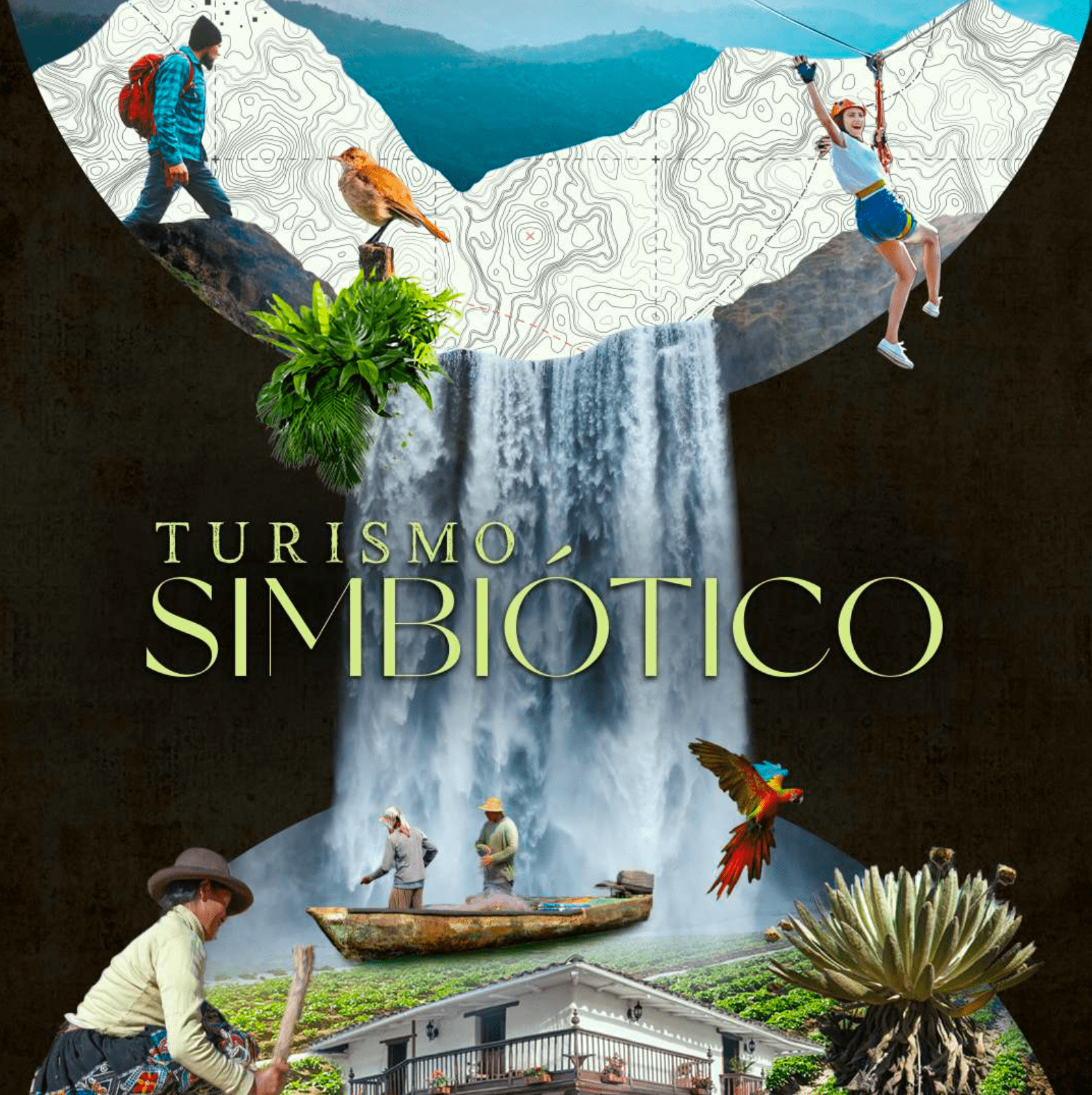
This situation led us, as designers, to question from our virtual realities, the potential future of tourism not as a synonym for destruction, but a building block of life. We proposed a new tourism category centered on justice and equality among all stakeholders: a symbiosis seen as an exchange of experiences and knowledge between entities, fostering mutual support and care for both people and the environment. We named it Symbiotic Tourism.
team
Juliana Pinilla (UX & Visual Designer)
Camila Bravo (Strategist and UX Designer)
María Paula Serrano (Researcher)
Laura La Rotta (UX Designer)
the project
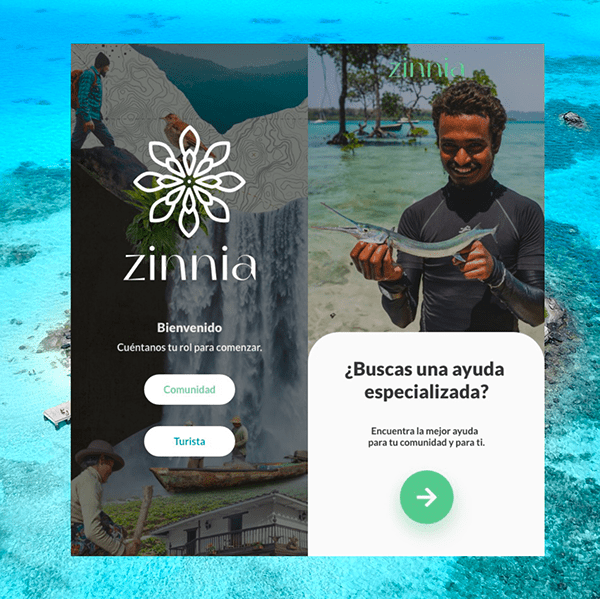
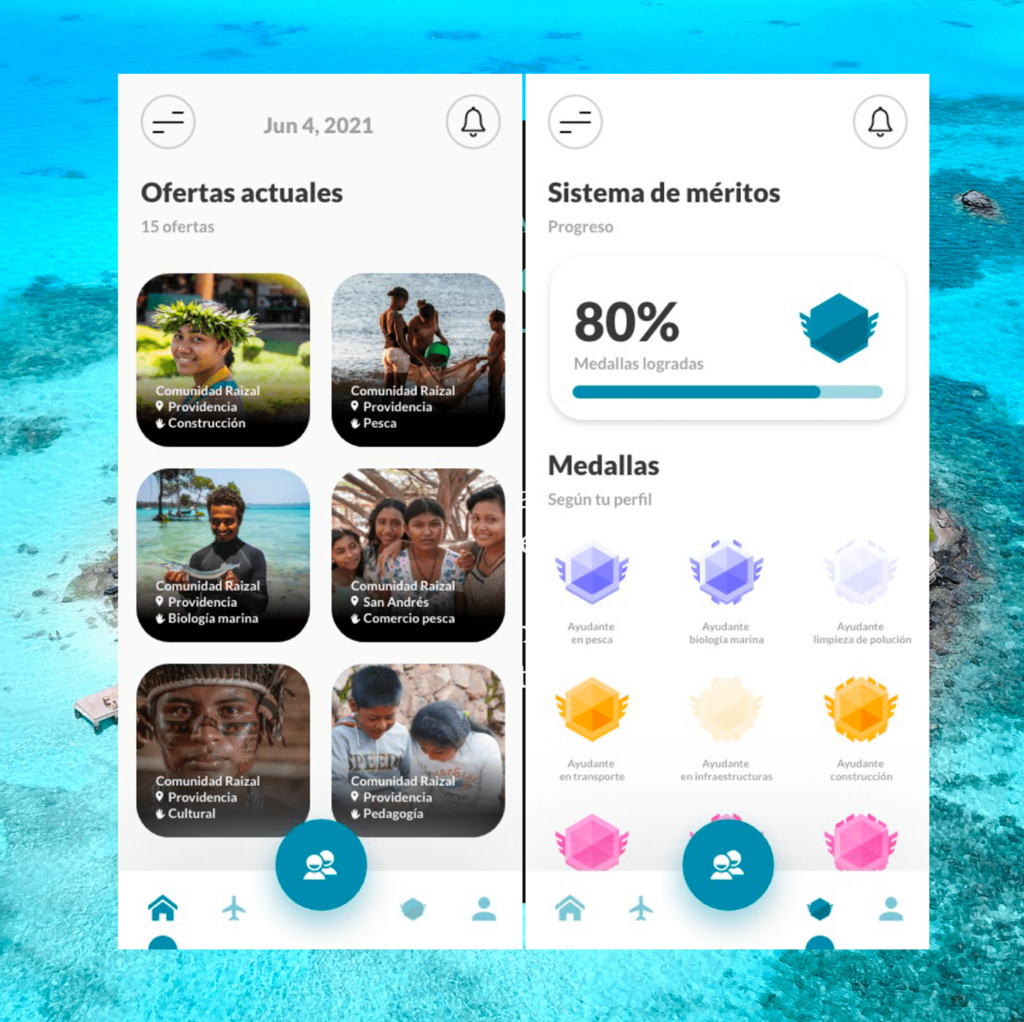
This new approach recognizes above all the need to give more agency and decision-making power to local communities when hosting visitors on their territory. We understood that these communities cannot simply be accessories to tourist destinations or static pieces to be admired by tourists; they are the guardians of their ecosystems. To achieve this, we designed a platform that centralizes the necessary interactions to carry out effective symbiotic tourism in Providencia, a small archipelago of no more than 6,000 inhabitants located in the Caribbean Sea, between Costa Rica and Jamaica.
service blueprint
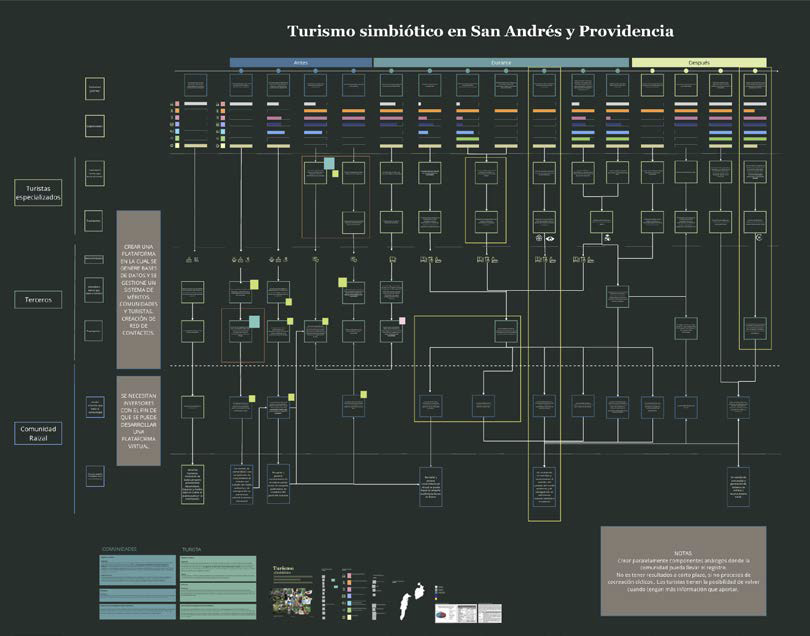
A service blueprint was designed based on the customer journey. This was our guide for our product that included 3 months of research. The blueprint included: Stakeholders, Tourist Actions, Touch Points, Sector/industries, Actions Through Third Parties and Local Community Actions. All of this while focusing on implementing the UN’s goals for sustainable development.
why zinnia
It is a plant that has a symbiotic relationship with bees and other animals in the environment.
Zinnia materializes symbiosis for tourism, allowing both (communities and travelers) to select experiences that resonate with them.